

German Hop Varieties
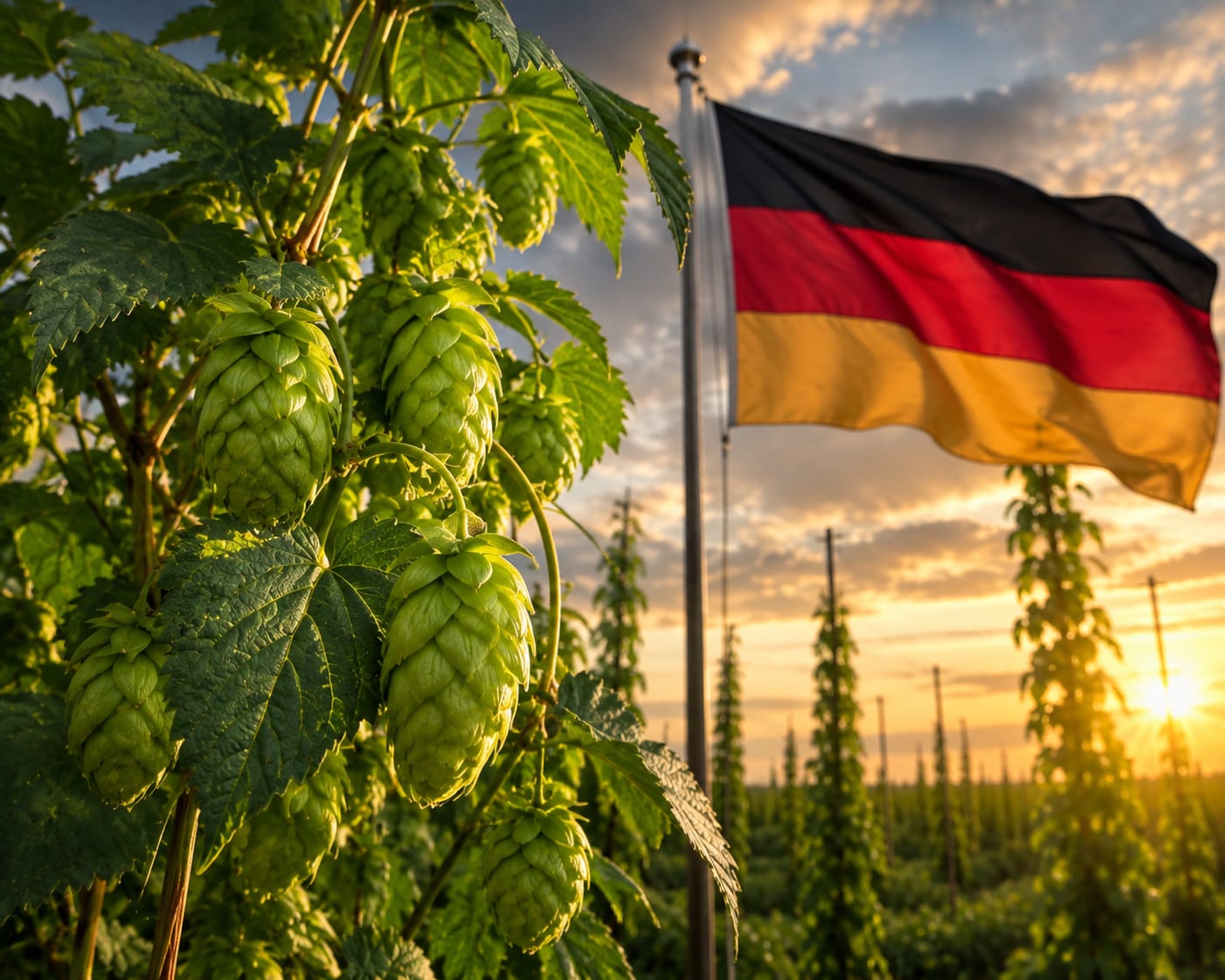
German Hop Varieties: Characteristics, Aromas and Brewing
When discussing German hops, most brewers immediately think of the noble varieties grown in Hallertau, Tettnang and Spalt: elegant, delicate, herbal and spicy hops traditionally associated with Pilsner, Helles, Kolsch and wheat beers. Today, however, the German hop landscape is far more diverse.
Alongside historic landrace varieties, Germany now offers efficient high-alpha hops, modern aroma cultivars and new varieties bred to cope with higher temperatures, drought, plant diseases and the need to reduce agricultural inputs.
Much of this evolution has taken place at the Hop Research Center Hull in Bavaria, together with breeding programs operated by companies and grower organizations such as Hopsteiner and HVG. Modern German breeding follows two parallel objectives: preserving the traditional noble hop character through stronger and more climate-resilient plants, and developing fruit-forward aroma profiles capable of competing with American and Southern Hemisphere varieties.
From Noble Hops to Climate-Resilient Cultivars
German hop varieties can be divided into four broad groups:
- Noble and landrace varieties, such as Hallertauer Mittelfruher, Tettnanger and Spalter.
- Modern classic aroma varieties, such as Perle, Hallertauer Tradition, Saphir and Spalter Select.
- Bittering and dual-purpose varieties, such as Magnum, Herkules, Polaris and Titan.
- Modern flavor varieties, such as Mandarina Bavaria, Hallertau Blanc, Huell Melon, Ariana, Callista, Solero and Tango.
The boundaries between these groups are not rigid. Some varieties originally developed for bittering contain enough essential oils to be interesting in late additions, while several modern aroma hops have sufficient alpha acids to be used as dual-purpose varieties.
Crop year, growing region, harvest date, storage conditions and processing format can all significantly affect the characteristics of an individual lot. The analytical values normally associated with each variety should therefore be regarded as typical ranges rather than fixed specifications.
German Noble Hop Varieties
Hallertauer Mittelfruher
Hallertauer Mittelfruher is probably the archetypal German noble hop. It usually has a low alpha acid content, commonly around 3 to 5%, and a relatively modest total oil level.
Its strength does not come from aromatic intensity but from the balance between floral, herbal, mildly spicy and delicate citrus notes. The overall profile is refined, soft and highly integrated, rather than loud or immediately recognizable.
Hallertauer Mittelfruher is especially suitable for Helles, German Pilsner, Marzen, Bock, Kellerbier, Kolsch and Weissbier. It can be used throughout the boil, although its most distinctive contribution appears in late additions and in whirlpool additions at moderate temperatures.
When used in dry hopping, it tends to produce a fine herbal and floral aroma rather than the intense citrus, resinous or tropical character associated with modern American varieties.
Typical values include approximately 3 to 5% alpha acids, relatively low cohumulone and around 0.7 to 1.0 ml of total oil per 100 grams.
Tettnanger
Tettnanger is traditionally grown around the town of Tettnang, near Lake Constance in southern Germany. It offers a delicate combination of floral, herbal and spicy aromas, sometimes accompanied by subtle citrus, earthy and tea-like notes.
Compared with Hallertauer Mittelfruher, Tettnanger can appear slightly spicier and more rustic, while maintaining the characteristic elegance of a noble hop.
It is well suited to Pilsner, Helles, Kolsch, Altbier, Saison, Belgian ales and wheat beers. Its relatively low alpha acid content makes it inefficient as a primary bittering hop, but highly valuable in beers where hop aroma must remain elegant and balanced with malt and fermentation character.
Tettnanger is best used in late-boil additions, whirlpool additions or very restrained dry hopping. Typical alpha acid levels are around 3 to 6%, with total oil generally below 1 ml per 100 grams.
Spalter and Spalter Select
Spalter is a traditional variety associated with the Spalt growing region. It is known for spicy, herbal, floral and slightly woody aromas. Its character can also include subtle pepper, hay and earthy notes.
It performs especially well in traditional lagers where hops should provide complexity without dominating the malt profile.
Spalter Select is a more modern cultivar developed to reproduce the character of noble hops while providing improved agricultural performance. It generally contains around 3 to 6% alpha acids and offers a clean herbal, spicy and lightly citrus profile.
Both varieties are suitable for Pilsner, Helles, Märzen, Bock, Altbier and Kölsch. Spalter Select is particularly useful when a brewery wants traditional German aroma with greater consistency and availability than some historic landrace varieties.
Hersbrucker Spat
Hersbrucker Spat is a traditional German variety with very low alpha acid values and a soft aromatic profile. It can express floral, herbal, spicy and mildly fruity notes, with a particularly delicate overall character.
It is suitable for Helles, amber lagers, Bock, wheat beers and Belgian ales. Its main value lies in late-boil and aroma additions rather than in efficient bittering.
Typical alpha acid values are around 2 to 5%, with low cohumulone and approximately 0.5 to 1.0 ml of total oil per 100 grams.
Although highly regarded for its brewing quality, Hersbrucker Spat shares some of the agricultural and economic limitations of other historic low-yield varieties.
Classic German Aroma Varieties
Perle
Perle is one of the most versatile German hop varieties. It combines floral, herbal, spicy and mildly fruity notes with a higher alpha acid content than most traditional landraces.
It can be used both for bittering and aroma in German Pilsner, Helles, Kolsch, Altbier, Bock, wheat beers and modern craft lagers.
When added at the beginning of the boil, Perle produces relatively clean and balanced bitterness. In late additions, it retains a recognizable continental character with floral, spicy and herbal nuances.
Typical values include approximately 5 to 9% alpha acids and around 1.0 to 1.5 ml of total oil per 100 grams.
Hallertauer Tradition
Hallertauer Tradition was developed to provide a profile similar to Hallertauer Mittelfruher while offering improved agricultural performance.
Its aroma includes floral, herbal, spicy, earthy and lightly citrus notes. Compared with historic noble varieties, it normally has a higher alpha acid content, usually around 4 to 7%, which allows it to be used throughout the brewing process.
Hallertauer Tradition is a reliable choice for Pilsner, Helles, Marzen, Kolsch, Weissbier and modern lagers. Its aroma remains delicate but is often slightly more structured and assertive than that of Hallertauer Mittelfruher.
Saphir
Saphir is an aroma cultivar characterized by floral, spicy, herbal and citrus qualities. Its citrus character is often associated with mandarin, bergamot or orange peel.
Although clearly German in character, Saphir is brighter and more expressive than many traditional noble varieties. It works especially well in modern Pilsners, Helles, Kölsch, Saison, Belgian Blonde, Witbier and wheat beers.
It can also be used in moderate dry hopping when the brewer wants an elegant citrus aroma without the intense resin, grapefruit or tropical fruit qualities of American hops.
Typical values include approximately 2 to 5% alpha acids and around 1.0 to 1.4 ml of total oil per 100 grams.
German High-Alpha Varieties
Hallertauer Magnum
Magnum is one of the best-known German bittering hops. It normally contains approximately 10 to 15% alpha acids and produces clean, linear and relatively neutral bitterness.
It is most commonly used at the beginning of the boil in lagers, Pilsners, Bocks, Belgian ales and many top-fermented beer styles.
Despite having a significant essential oil content, Magnum is rarely selected as the main aroma hop. Its sensory neutrality makes it particularly useful when the brewer wants to separate bitterness construction from aroma development.
A common approach is to use Magnum for bittering and a more expressive noble or modern aroma variety in the final stages of the brewing process.
Herkules
Herkules is a high-alpha variety developed at Hüll and widely cultivated in Germany. It can exceed 15% alpha acids and provides excellent agricultural yields.
Compared with Magnum, Herkules has a more noticeable aromatic profile, with spicy, floral, herbal and mildly fruity notes.
It is primarily suitable for bittering lagers, Pilsners, Bocks, Doppelbocks and high-gravity beers. It can also be used in small late additions when a more pronounced spicy hop component is desired.
Because of its high alpha acid content, Herkules allows breweries to achieve the required bitterness with less hop material, reducing vegetal matter and wort losses.
Polaris
Polaris is one of the German cultivars with the highest alpha acid content, frequently reaching or exceeding 20%. It also contains a considerable quantity of essential oils.
Its aromatic profile can include herbal, resinous, spicy and menthol-like notes, sometimes accompanied by a cooling impression reminiscent of eucalyptus or peppermint.
Polaris can be used as an efficient bittering hop, but it is also interesting in late additions for experimental India Pale Lagers, Stouts, Porters, Bocks, modern dark beers and unconventional IPAs.
Its intensity requires careful dosing. Excessive use in late hopping can allow the menthol or cooling character to dominate the beer.
Typical values include approximately 18 to 23% alpha acids and up to 3 ml or more of total oil per 100 grams.
Titan
Introduced by the Hop Research Center Hull in 2022, Titan is one of the most important recent German high-alpha releases. It was developed from Polaris and combines approximately 16 to 20% alpha acids with agricultural yields comparable to Herkules.
Its profile includes spicy, herbal and fruity qualities. Its cohumulone level is relatively moderate for a high-alpha variety, generally around 20 to 24% of total alpha acids.
Titan is suitable for Pilsner, Helles, Bock, strongly hopped lagers and any beer requiring an efficient and relatively refined source of bitterness.
Its high total oil content, commonly around 2.5 to 3.5 ml per 100 grams, also makes it a potential candidate for late additions, although its principal role remains bittering.
Modern German Flavor Varieties
Mandarina Bavaria
Mandarina Bavaria was one of the first cultivars in the new generation of aroma hops developed at Hull. Its name refers to its best-known descriptor: mandarin orange.
Its profile can include sweet orange, tangerine, citrus peel, fruit and mild herbal notes. With alpha acid values generally around 7 to 10%, it can be used as a dual-purpose hop, although its best qualities emerge in late-boil, whirlpool and dry-hop additions.
Mandarina Bavaria is suitable for Pale Ale, IPA, Session IPA, India Pale Lager, Wheat Ale and modern hop-forward Pilsners.
Compared with classic American citrus varieties, its character is usually softer, sweeter and less resinous.
Hallertau Blanc
Hallertau Blanc is distinguished by aromas of white grapes, gooseberry, white wine, citrus, tropical fruit and flowers. It is one of the German varieties that most clearly departs from the traditional noble hop profile.
It is suitable for IPA, Saison, Belgian ales, Brut IPA, India Pale Lager and beers inspired by wine-like aromatic profiles.
Whirlpool and dry-hop additions emphasize its vinous and fruity qualities. Excessive doses, however, can produce pronounced vegetal, grassy or underripe grape impressions.
Typical alpha acid values are approximately 8 to 12%, with total oil commonly around 1.0 to 1.5 ml per 100 grams.
Huell Melon
Huell Melon has a sweet and fruity profile often associated with honeydew melon, strawberry, red berries and mild herbal notes.
It may not have the intensity of the most powerful American tropical varieties, but it can create a distinctive character in beer styles built on relatively neutral malt and fermentation profiles.
Huell Melon is suitable for Wheat Ale, Pale Ale, Session IPA, modern lagers and low-alcohol beers. It performs well in whirlpool and dry hopping, especially when combined with more intense citrus varieties.
Typical values include approximately 6 to 8% alpha acids and around 1.0 to 1.3 ml of total oil per 100 grams.
Ariana
Ariana can express blackcurrant, red berries, peach, pear, citrus and tropical fruit. With alpha acid values commonly around 8 to 13%, it is a flexible variety with both bittering and aroma potential.
It is suitable for Pale Ale, IPA, India Pale Lager, Saison and contemporary lager styles.
In moderate doses, Ariana can add a clean fruity character while preserving drinkability. More intensive whirlpool and dry-hop additions can emphasize blackcurrant, dark berry and tropical notes.
Callista
Callista has a lower alpha acid content than Ariana and a profile centered on berries, pear, peach, citrus, passion fruit and occasional caramel-like nuances.
It is especially interesting in aroma additions and dry hopping for Session IPA, Pale Ale, Wheat Ale and fruit-forward lager.
Its relatively gentle intensity makes it useful in low-alcohol or delicately structured beers, where more aggressive hop varieties could easily become dominant.
Typical alpha acid values are around 2 to 5%, with approximately 1.0 to 1.5 ml of total oil per 100 grams.
Recent German Hop Releases
Diamant
Diamant was developed from the traditional Spalter landrace and commercially introduced around 2019 and 2020. Its purpose is to provide a classic noble profile through a plant with improved yield, robustness and disease resistance.
Its sensory profile can include lavender, fennel, anise, lemon balm, lemon, wild strawberry, melon and peach. Depending on harvest conditions and brewing use, it can range from traditionally herbal and spicy to surprisingly fruity.
With approximately 3 to 7% alpha acids and up to 1.7 ml of total oil per 100 grams, Diamant is especially suitable for late additions in Pilsner, Helles, Kolsch, Saison and premium lager.
It is an attractive option for brewers seeking a continental aroma with slightly greater complexity than traditional German landraces.
Aurum
Aurum is a modern Hüll aroma cultivar designed as an alternative to traditional noble varieties. It retains an elegant profile with floral, herbal, spicy and citrus notes while providing improved agricultural characteristics.
Its alpha acid content is generally moderate, around 4 to 6%, while total oil can reach approximately 1.5 ml per 100 grams.
Aurum is suitable for Pilsner, Helles, Kolsch, Marzen, Bock and wheat beers, particularly in late-boil and whirlpool additions.
It can be regarded as a bridge between historic noble hops and the latest generation of climate-resilient German cultivars.
Akoya
Akoya was developed through the Hopsteiner breeding program and is mainly cultivated in Germany. Its profile includes tea, pepper, spice, green fruit and mild citrus notes.
With approximately 9 to 10% alpha acids and 1.5 to 2.0 ml of total oil per 100 grams, it can function both as an aroma hop and as a dual-purpose variety.
Akoya is suitable for modern Pilsner, India Pale Lager, Saison, Belgian ales, Kolsch and spicy lager styles.
Its brewing character can be compared with Perle, Hallertauer Tradition and Northern Brewer, although Akoya generally provides greater aromatic intensity.
Solero
Solero is a modern variety developed through the Hopsteiner breeding program. It expresses mango, passion fruit, tropical fruit, citrus, floral and mildly resinous notes.
It normally contains around 9 to 10% alpha acids and 1.5 to 2.0 ml of total oil per 100 grams. It is particularly suitable for Pale Ale, IPA, NEIPA, India Pale Lager and modern interpretations of Hefeweizen.
Whirlpool and dry-hop additions allow Solero to produce a clearly tropical character. Its floral, citrus and resinous elements help prevent the resulting aroma from becoming excessively sweet or one-dimensional.
Solero is especially interesting for brewers who want a German-grown hop with a modern New World-style flavor profile.
Tango
Tango was introduced by the Hop Research Center Hull in 2021. It derives from Cascade and a Hüll breeding line and was designed to combine brewing quality, high yield, disease resistance and climate tolerance.
When used during the boil, Tango produces a fresh and pleasantly hoppy profile with citrus and green fruit. In very late additions and dry hopping, it can develop pronounced passion fruit notes, particularly in combination with aromatic top-fermenting yeast strains.
Tango contains approximately 8.5% alpha acids and has a high total oil content, commonly reported between about 2.1 and 2.8 ml per 100 grams.
It is suitable for modern Pilsner, Pale Ale, IPA, India Pale Lager and hybrid-fermentation beers. Tango can also serve as a sustainable alternative to older aroma varieties without radically changing the expected flavor of traditional lager styles.
Huell Classic
Huell Classic is one of the most significant recent developments in German hop breeding. Previously identified by the breeding code 2013/017/107, or H17107, it was developed to reproduce the character of traditional German noble hops through a more climate-resilient and agronomically efficient plant.
Its sensory profile includes fresh grass, hay, herbs, pepper, mild spice, menthol and subtle citrus notes. Typical alpha acid values range from approximately 4.5 to 8%, with around 0.9 to 1.7 ml of total oil per 100 grams.
Huell Classic is designed as a potential alternative to Hersbrucker, Perle, Hallertauer Tradition and other traditional Central European aroma varieties.
It was not created to produce intensely tropical or fruit-driven beers. Its purpose is more complex: preserving the aromatic identity of Pilsner, Helles, Kolsch, Marzen and traditional lager while improving yield, plant health and adaptation to warmer and drier growing conditions.
Wider commercial availability began developing during 2025 and 2026, making Huell Classic one of the most interesting varieties for breweries seeking classic German character with improved future reliability.
Choosing the Right German Hop Variety
For a traditional lager, Hallertauer Mittelfruher, Tettnanger, Spalter, Hersbrucker and Huell Classic are among the most elegant choices.
For greater reliability and aromatic intensity without abandoning the continental character, brewers can consider Perle, Hallertauer Tradition, Saphir, Diamant, Aurum or Tango.
For bittering, Magnum remains a clean and neutral option. Herkules, Polaris and Titan provide higher alpha acid concentrations and, depending on the timing of the addition, a more pronounced aromatic contribution.
Mandarina Bavaria, Hallertau Blanc, Huell Melon, Ariana, Callista, Solero and Tango allow brewers to create German or international beer styles with citrus, vinous, tropical and fruit-forward profiles.
The final choice should not be based only on the name of the variety. The actual alpha acid content, total oil concentration, crop year, storage history and sensory characteristics of the individual lot remain essential.
Two lots of the same cultivar can produce noticeably different results, especially when used in whirlpool or dry hopping. Sensory evaluation of the raw hops and small-scale brewing trials are therefore valuable steps before introducing a new variety into a production recipe.
Tradition and Innovation
German hops are no longer defined only by delicate noble aromas. Modern cultivars developed at Hull and through private breeding programs cover a wide sensory range, from hay, herbs and spices to mandarin, white grapes, red berries, mango and passion fruit.
The most interesting direction is not the simple imitation of American hops. The real strength of German breeding lies in its ability to combine sensory identity, agricultural efficiency and climate adaptation.
Titan, Tango, Diamant and especially Huell Classic represent this philosophy. Some focus on efficient bitterness, some on modern fruit character, and others on protecting the aromatic identity of traditional German lager.
As historic low-yield cultivars become increasingly difficult to grow under warmer and less predictable conditions, the future of German hops will depend on varieties that can provide brewing quality, sustainability and stable agricultural performance without losing the character that made German beer famous.

Enrico Mollica
Aeronautical engineer and manager of a team specialized in numerical simulations in the automotive field. Consultant for breweries on hopping techniques and author for the Giornale della Birra. After years studying the aromatic qualities of hops, in 2023 he created the algorithm behind the HOP CONTROL software.
The tool for complete hop control is here.
Join brewers using data — not guesswork — to design their aroma.